 Boston Workers Compensation Lawyer Blog


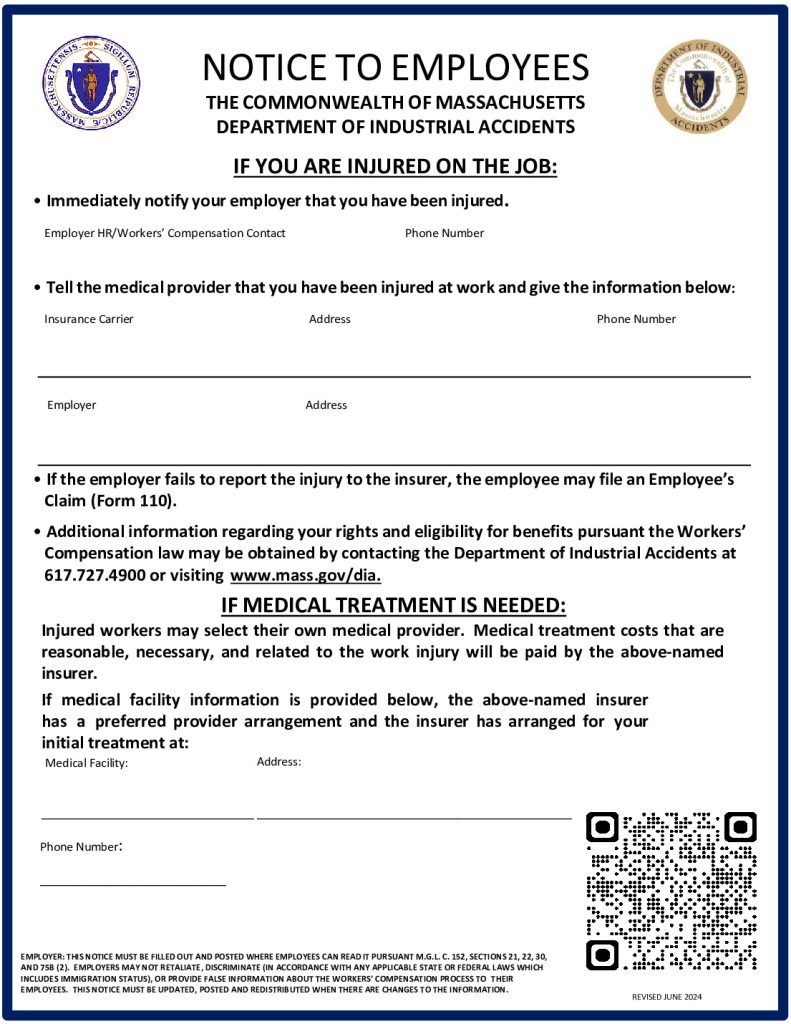
If you were injured at work in Massachusetts and your employer refuses to file an injury report, you are not alone. This situation happens far more often than most people realize. Every week, workers contact our office saying things like:
-
“My boss told me to use my own health insurance.”
-
“HR won’t file the paperwork.”
-
“They don’t believe the injury is serious.”
-
“They told me to take a few sick days instead.”
Here’s the truth:
Under Massachusetts law, your employer must file a First Report of Injury (Form 101) — and if they don’t, you still have the right to receive workers’ comp benefits.
This guide explains exactly what the law requires, why some employers refuse to file the report, and what steps you can take immediately to protect your weekly checks, medical care, and job.
What Massachusetts Law Requires: The Employer’s Duty to File Form 101
Under M.G.L. c. 152, employers are legally obligated to file a Form 101 – Employer’s First Report of Injury with their workers’ compensation insurer when:
-
An employee suffers an injury at work and
-
The injury causes five or more days of total or partial disability, or
-
The injury requires medical treatment that may lead to a claim.
They must file this form within seven days of learning about your injury.
This report triggers the insurer’s responsibility to investigate, start benefits, or issue a denial.
If your employer refuses to file Form 101, they are violating Massachusetts law.
But their refusal does not prevent you from filing a claim or receiving benefits. It only delays the process — unless you act quickly.
Why Employers Refuse to File Injury Reports (Top 5 Reasons)
At CRC, representing injured workers throughout Massachusetts, we repeatedly see the same reasons employers avoid filing injury reports:
1. Fear of Higher Insurance Premiums
Some employers mistakenly believe that reporting fewer injuries keeps their rates low.
2. They Don’t Think the Injury Is “Serious Enough”
Supervisors often misunderstand the law or assume only major injuries must be reported.
3. They Want to Avoid Admitting Unsafe Conditions
Especially on construction sites or industrial jobs.
4. They Want You to Use Your Own Health Insurance
This is illegal — and it often leads to billing problems later.
5. They Simply Don’t Understand the Legal Requirements
Small businesses often lack HR support and mis-handle workplace injuries.
Regardless of the reason, your employer’s refusal does not weaken your legal rights.
Can You Still Get Workers’ Compensation If Your Employer Won’t File the Report?
Yes. Absolutely.
Your right to workers’ compensation does not depend on:
-
Whether your employer believes you
-
Whether HR completes paperwork
-
Whether a supervisor “approves” your injury
-
Whether your employer thinks the injury is serious
Workers’ compensation in Massachusetts is a no-fault system.
The only questions that matter are:
-
Were you injured?
-
Did it arise out of and in the course of employment?
Even if your employer refuses to file Form 101, you can still file a claim and receive benefits.
Step-by-Step: What to Do If Your Employer Refuses to File Your Work Injury Report
This is the exact process we guide injured workers through at CRC.
Step 1: Document That You Reported the Injury
You must be able to show that your employer knew you were hurt. That’s it.
Acceptable proof includes:
-
A text message to your supervisor
-
An email to HR
-
A written incident report
-
A group chat message on a work app
-
A witness who saw you report it
If you haven’t documented it, send this now:
“I am confirming that I reported my work-related injury that occurred on [date], involving my [body part]. I am experiencing symptoms and require medical evaluation. Please file the mandatory Form 101.”
This creates a timestamped record your employer can’t dispute.
Step 2: Seek Medical Treatment and Tell the Doctor the Injury Is Work-Related
This is one of the most important steps for your claim.
When you tell your doctor the injury happened at work, they will note “work-related injury” in your records. Insurers rely heavily on early medical records to evaluate:
-
Causation
-
Your disability status
-
Whether the injury is legitimate
A clear medical record often outweighs a disputing employer.
Step 3: Speak With a Workers’ Compensation Attorney
When your employer refuses to file the report, the insurance company often has no idea you were injured. This delays:
-
Weekly disability checks
-
Payment of medical bills
-
Approval for physical therapy, MRIs, injections, etc.
A lawyer can:
-
Identify the correct insurer
-
Notify the insurer directly
-
File the appropriate forms
-
Protect you if the employer or insurer disputes the injury
-
Ensure benefits start as soon as possible
Workers’ comp attorneys in Massachusetts charge nothing upfront — fees are set by statute and paid by the insurer in most cases.
Step 4: File a Claim With the DIA (Form 110)
If your employer refuses to file the injury report, you can file your own claim with the Department of Industrial Accidents using Form 110 – Employee Claim.
You (or your attorney) will need:
-
Medical documentation
-
Employment information
-
A description of the injury
-
The insurer name (if known)
Filing Form 110 formally starts your workers’ compensation case.
Step 5: The DIA Can Penalize Your Employer
If an employer fails to file Form 101 or deliberately delays reporting your injury, the Massachusetts DIA has the authority to impose financial penalties.
While these fines don’t go to you, they:
-
Increase the credibility of your claim
-
Encourage proper reporting for future workers
-
Create a record of employer non-compliance
Will a Delay Hurt My Workers’ Comp Case?
Usually no, as long as you:
-
Reported the injury
-
Sought timely medical treatment
-
Documented what happened
-
File a claim once you realize the employer won’t cooperate
Insurers sometimes argue that a delay means the injury must not be real or severe — but medical records and documentation can quickly overcome this.
We win these cases all the time.
What If My Employer Claims I Was “Not on the Clock”?
This is one of the most common excuses used to avoid filing a report.
But under Massachusetts law, you may still be covered if you were:
-
On the job site
-
Preparing for work
-
Cleaning up after work
-
Walking to your workstation
-
Performing duties incidental to employment
A supervisor’s opinion is not the law. The DIA determines compensability — not your employer.
What If My Employer Retaliates or Threatens My Job?
Massachusetts law strictly prohibits employers from retaliating against employees for:
-
Reporting a workplace injury
-
Filing a workers’ compensation claim
-
Seeking medical care
-
Hiring an attorney
Retaliation can expose the employer to separate legal claims, including reinstatement and damages.
If your employer:
-
Cuts your hours
-
Changes your shift
-
Disciplines you
-
Threatens termination
-
Treats you differently after an injury
…call an attorney immediately. Document everything.
Frequently Asked Questions
Can I still file a workers’ comp claim if my employer won’t report the injury?
Yes. File Form 110 with the DIA or contact an attorney who can file for you.
Is it illegal for an employer not to file a work injury report in Massachusetts?
Yes. Employers are required to file Form 101 within seven days of knowing about the injury.
How long do I have to file a workers’ comp claim?
Up to four years from the date you became aware the injury was work-related — but you should never wait.
What if HR or a supervisor says the injury “doesn’t qualify”?
They do not decide what qualifies — the law does.
What if I already used my own health insurance?
Your workers’ comp claim can still proceed. Medical billing can be corrected later.
Can I be fired for filing a workers’ compensation claim?
No. Retaliation is illegal.
Conclusion: Your Employer Can Delay the Process — but They Cannot Take Away Your Rights
Many workers panic when their employer refuses to file an injury report. But under Massachusetts workers’ compensation law, your rights do not depend on employer cooperation.
You are still entitled to:
-
Job protection
-
Legal representation
The key is acting quickly, documenting everything, and filing your claim correctly.
Get Help Today
At Carney, Rezendes & Crowley, we help injured workers across Massachusetts — especially in construction, manufacturing, public safety, and union trades — protect their benefits and navigate employer disputes.
📞 Call: (617) 426-9797
🌐 www.carnlaw.com
We’ll make sure your injury is reported and your benefits begin without delay.
